
01
Luleå
Hydrogen reduction and electric arc furnaces, side by side.
3.2 Mt
Steel a year
1,100
People
1940
Since
Steel made with hydrogen instead of coal. The only by-product is water.
Luleå · Gävle
5.0 Mt
Steel a year
0.34 t
CO₂ per tonne
1,900
People

Most steel is still made with coal. We replaced it with hydrogen at every step that matters.
Most steel is still made with coal. We replaced it with hydrogen at every step that matters.

Iron ore pellets travel 300 km from our mine on our own railway.
68
Wagons per train
In the shaft furnace, hydrogen strips oxygen from the ore. What is left is sponge iron and water vapour.
2.1 Mt
Sponge iron a year
Sponge iron and scrap are melted in an electric arc furnace on fossil-free electricity.
1,600 °C
In the furnace
Slabs are rolled into coil, plate and rebar in Gävle, then leave by ship.
5.0 Mt
Steel a year
Iron ore pellets travel 300 km from our mine on our own railway.
68
Wagons per train
In the shaft furnace, hydrogen strips oxygen from the ore. What is left is sponge iron and water vapour.
2.1 Mt
Sponge iron a year
Sponge iron and scrap are melted in an electric arc furnace on fossil-free electricity.
1,600 °C
In the furnace
Slabs are rolled into coil, plate and rebar in Gävle, then leave by ship.
5.0 Mt
Steel a year
Iron ore pellets travel 300 km from our mine on our own railway.
68
Wagons per train
In the shaft furnace, hydrogen strips oxygen from the ore. What is left is sponge iron and water vapour.
2.1 Mt
Sponge iron a year
Sponge iron and scrap are melted in an electric arc furnace on fossil-free electricity.
1,600 °C
In the furnace
Slabs are rolled into coil, plate and rebar in Gävle, then leave by ship.
5.0 Mt
Steel a year
Two works on the Gulf of Bothnia, linked by rail and sea.
Two works on the Gulf of Bothnia, linked by rail and sea.
Hydrogen reduction and electric arc furnaces, side by side.
3.2 Mt
Steel a year
1,100
People
1940
Since

1.8 Mt
Rolled a year
Hydrogen reduction and electric arc furnaces, side by side.
3.2 Mt
Steel a year
1,100
People
1940
Since
1.8 Mt
Rolled a year
Hydrogen reduction and electric arc furnaces, side by side.
3.2 Mt
Steel a year
1,100
People
1940
Since
1.8 Mt
Rolled a year
Same steel, a fraction of the carbon. Every figure here is audited each year.
2030 target
2.1 t
Coal blast furnace, per tonne
0.34 t
Our hydrogen route today
2030 target
2.1 t
Coal blast furnace, per tonne
0.34 t
Our hydrogen route today
2030 target
2.1 t
Coal blast furnace, per tonne
0.34 t
Our hydrogen route today
−84%−84%
−84%−84%
−84%−84%
Each circle's area is the CO₂ from making one tonne of steel.
100%100%
100%100%
100%100%
Fossil-free electricity
92%92%
92%92%
92%92%
Process water reused
Six products, all made with hydrogen. Every order ships with its own carbon receipt.
Six products, all made with hydrogen. Every order ships with its own carbon receipt.

Strip steel rolled to order in Gävle, delivered as coil or cut to length.
1.5–25 mm
Thickness
900–2,100 mm
Width
Up to 32 t
Coil weight
0.34 t
CO₂ per tonne
Strip steel rolled to order in Gävle, delivered as coil or cut to length.
1.5–25 mm
Thickness
900–2,100 mm
Width
Up to 32 t
Coil weight
0.34 t
CO₂ per tonne

Hot-rolled coil cleaned in acid for a smooth, paint-ready surface.
1.5–8 mm
Thickness
900–1,850 mm
Width
Up to 30 t
Coil weight
0.36 t
CO₂ per tonne
Hot-rolled coil cleaned in acid for a smooth, paint-ready surface.
1.5–8 mm
Thickness
900–1,850 mm
Width
Up to 30 t
Coil weight
0.36 t
CO₂ per tonne

Thick plate for structures that carry real loads, cut and bevelled to drawing.
8–150 mm
Thickness
Up to 4,000 mm
Width
Up to 24 m
Length
0.38 t
CO₂ per tonne
Thick plate for structures that carry real loads, cut and bevelled to drawing.
8–150 mm
Thickness
Up to 4,000 mm
Width
Up to 24 m
Length
0.38 t
CO₂ per tonne

H-beams, I-beams and angles for buildings, halls and bridges.
80–600 mm
Height
Up to 24 m
Length
S355, S460
Grades
0.31 t
CO₂ per tonne
H-beams, I-beams and angles for buildings, halls and bridges.
80–600 mm
Height
Up to 24 m
Length
S355, S460
Grades
0.31 t
CO₂ per tonne

Ribbed bar that reinforces concrete, supplied straight or bent to schedule.
8–40 mm
Diameter
6–18 m
Length
B500B, B500C
Grades
0.29 t
CO₂ per tonne
Ribbed bar that reinforces concrete, supplied straight or bent to schedule.
8–40 mm
Diameter
6–18 m
Length
B500B, B500C
Grades
0.29 t
CO₂ per tonne

Hot-rolled rod in coils, drawn into wire by our customers.
5.5–16 mm
Diameter
Up to 2.2 t
Coil weight
SAE 1006–1080
Grades
0.30 t
CO₂ per tonne
Hot-rolled rod in coils, drawn into wire by our customers.
5.5–16 mm
Diameter
Up to 2.2 t
Coil weight
SAE 1006–1080
Grades
0.30 t
CO₂ per tonne
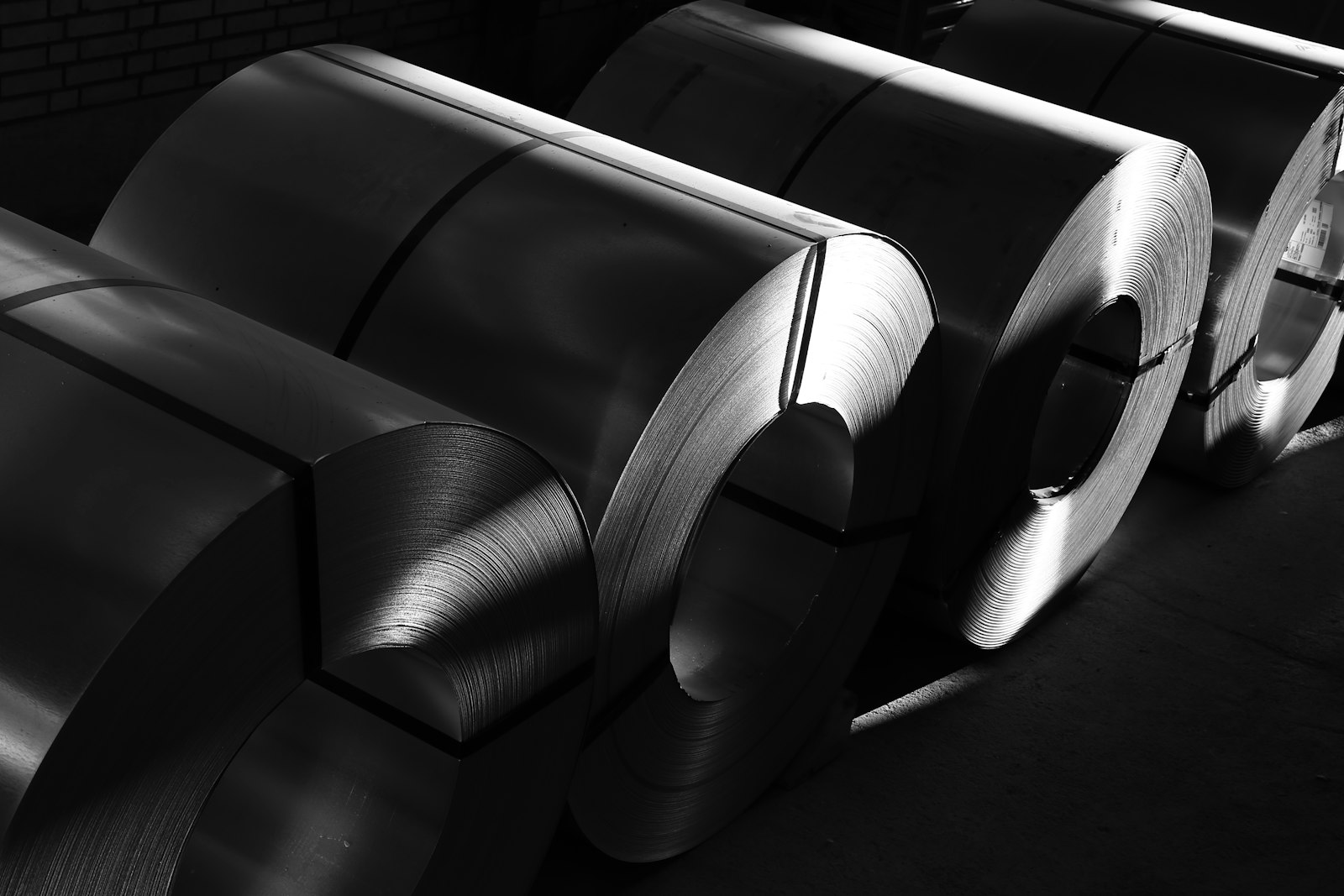
FL-01 · Flat steel · Cars, pipes, appliances
Strip steel rolled to order in Gävle, delivered as coil or cut to length.
Our steel holds up bridges, quays and turbines on two continents. A few of them.
Our steel holds up bridges, quays and turbines on two continents. A few of them.
Tell us what you’re making. Our sales engineers will help you pick the grade, size and delivery.


